
On Christmas Eve, Architosh will publish a special feature article titled “End of an Era: How Silicon Will Decide BIM’s Future.”
The article, however, will debut first this week in the next Xpresso-4X newsletter arriving this Thursday, 18 December 2025.
Why Silicon Decides
The features excerpt reads:
“As computing enters the voltage-limited era, the shift away from x86 toward ARM—already reshaping datacenters, laptops, and cloud platforms—carries consequences for architectural computing. This feature explores how those silicon realities are redefining BIM’s future, and why adaptation is no longer an option.”
It is important to note that the notion that silicon drives software, not the other way around, is not new. It has largely always been the case.
As microprocessors gain transistors and computational performance, roughly every 10x improvement, a new type of computer (or computing era) emerges, with periods of overlap.

At every 10x leap in microprocessor power (performance), a new type of computing has emerged. If we look at this chart, we are now in the era of AI Compute. In the latter half of the first decade, we were in the era of smartphone and tablet compute (cellular devices) and smoothly entered the era of cloud compute (datacenter). Yet, today’s dominant BIM and CAD solutions were all architected during the Workstation and Desktop eras.
Yet, the tools we use today in CAD and BIM industries are originally from the Workstation and Desktop eras. Today’s BIM 2.0 solutions are challenging desktop-era tools by leveraging unique capabilities enabled by the cloud (datacenter) compute paradigm.
But the AI computer era is different. It is categorically scaling (innovation, investment, and speculation) at unprecedented speeds, not seen since the Dot-Com boom. Because of this scale, it is placing unprecedented emphasis on energy efficiency due to its exponential electricity use.
Heterogeneous Silicon
Mobility has been around for decades, but smartphones and tablets have exponentially increased the number of mobile computer devices. As a result, ARM processors today outnumber x86 processors by nearly 30:1. And ARM chips were designed from the beginning with heterogeneous compute in mind, including the big.LITTLE architectural paradigm, whereas x86 chips from Intel and AMD have been playing catch-up with ARM.
In the early PC era, Intel x86 chips outnumbered RISC processors from companies like Sun Microsystems, HP, IBM, and others by a ratio very similar to 30:1. The vast volume helped Intel at both economies of scale and Wright’s Law (net positive effects from experience gained from production). Now the shoe is on the other foot, and it is AMD and Intel that are battling those same benefits now accruing to ARM and its many licensees.
Neural CAD Engines
While x86 chips have fallen behind Apple and Qualcomm badly in performance per watt (and absolute performance in cases like single-core), AMD and Intel are formidable chip design powerhouses. Yet, the battle now becomes substantially more complex in the AI era, where system-on-a-chip (SoC) designs offer key benefits such as unified system memory and high throughput between CPU, GPU, and NPU (neural) cores. Intel and AMD are emulating these designs.
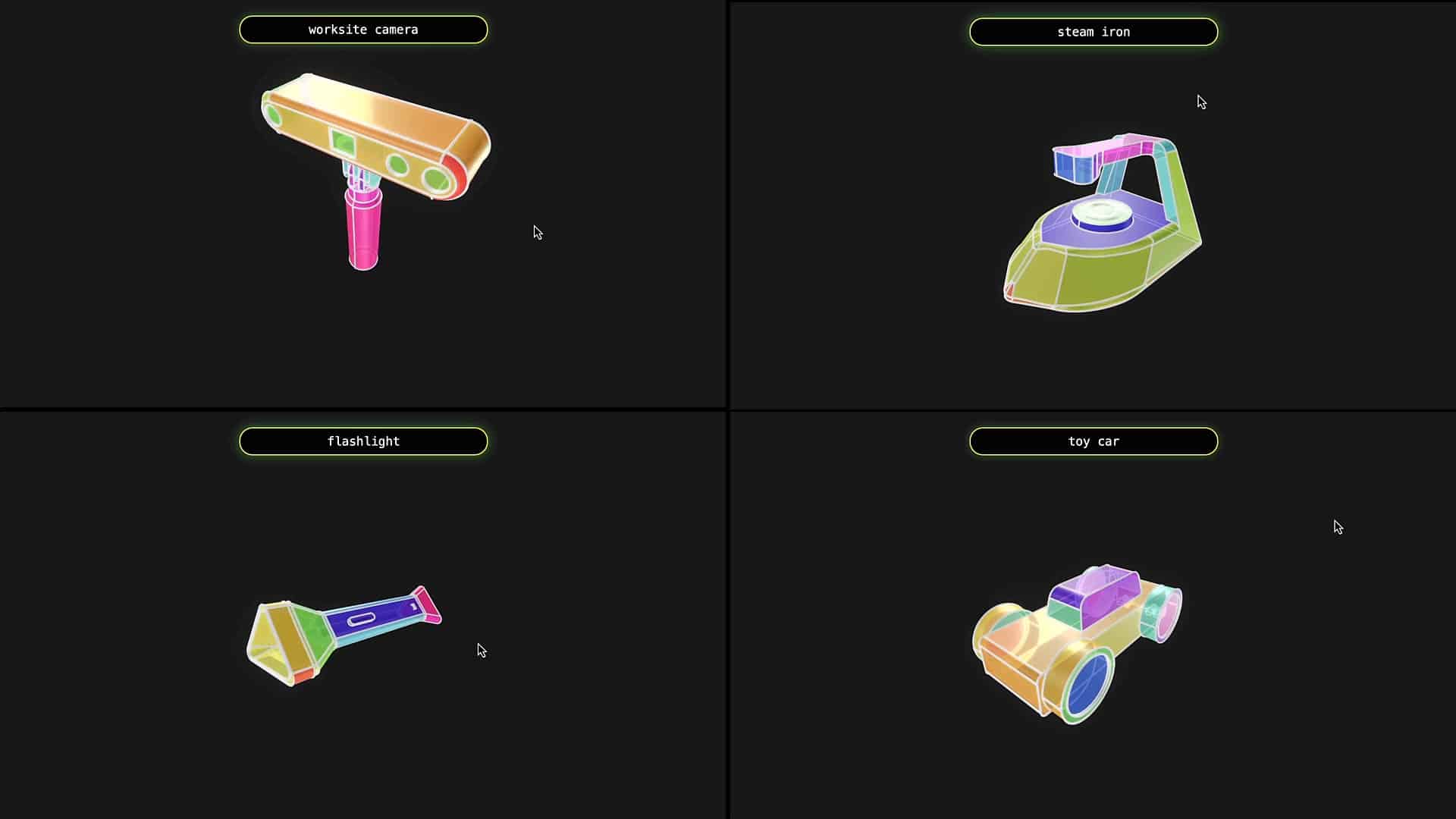
This view of the geometry-oriented AI Foundational Model (neural CAD engine) can create designs spontaneously from a text prompt. It is an entirely new machine learning approach to generating CAD objects, in contrast to classical parametric CAD engines that have been in use for 40 years.
Meanwhile, the CAD and BIM industry is increasingly leveraging NPUs and GPUs for new types of workloads based on AI inference and training. Autodesk’s Neural CAD engines were shown at AU25 in Nashville this past fall.
The special feature will cover in detail how Intel ran into physics at 10nm back in the middle of the last decade and how x86 contributes to the physics problem. It also highlights how Intel’s new 18A process node dramatically attacks these physics problems and why Intel may actually potentially lead again in some performance areas.
Viewers can read the special feature on Architosh on December 24th, or earlier by signing up for the Xpresso-4X newsletter. The newsletter goes out this week on Thursday, so sign up now to not miss out.


